
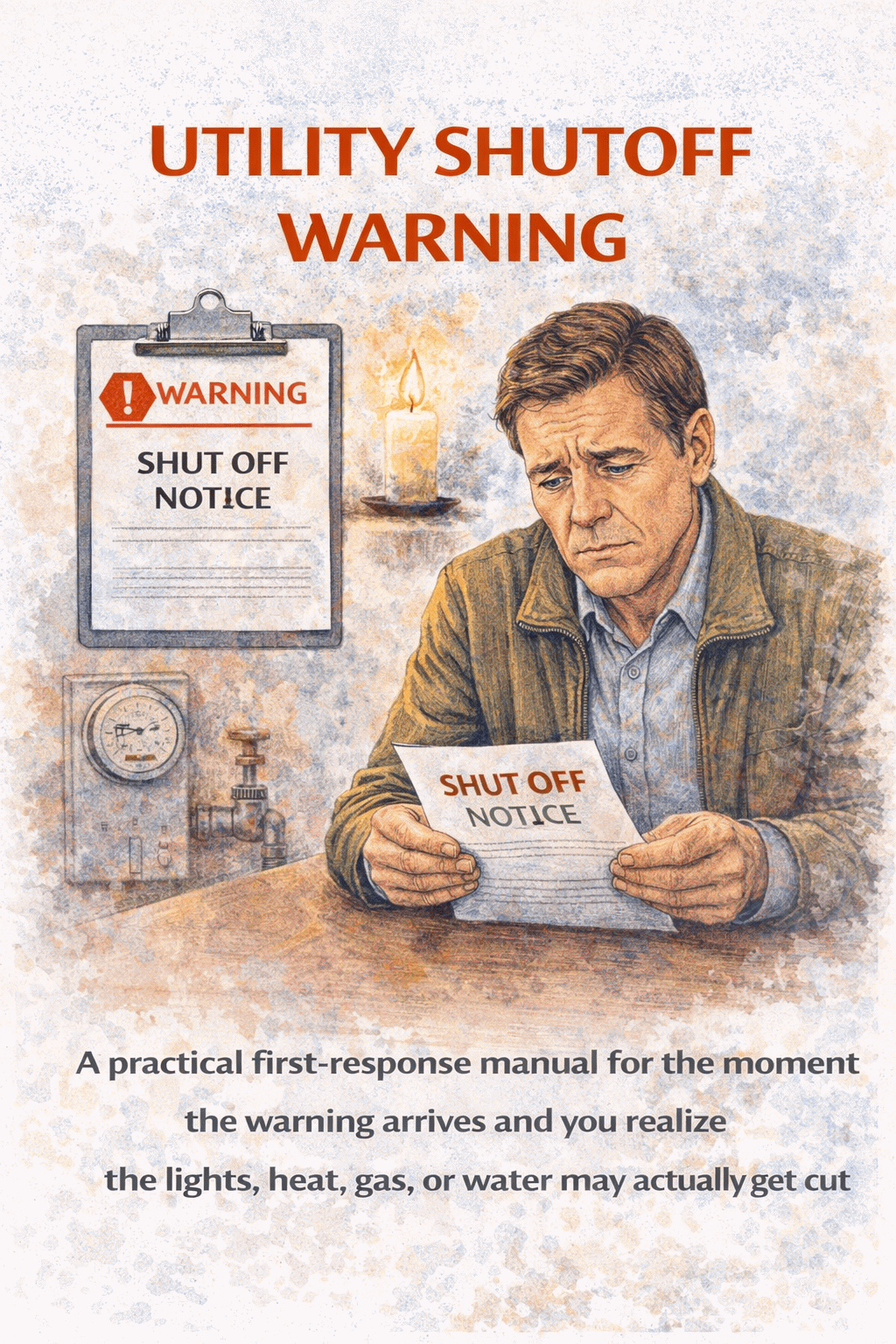
A practical first-response manual for the moment the warning arrives and you realize the lights, heat, gas, or water may actually get cut
This is the kind of notice people handle badly because the shame hits before the plan does.
They:
- ignore it
- panic-pay without checking options
- assume shutoff is automatic tomorrow
- miss hardship protections
- do not call until the deadline is already burning
The first rule is simple:
Do not ignore the notice, and do not agree to a payment plan you do not understand just to stop the fear.
Current FTC consumer guidance says that if you are behind or expect to be behind, you should contact the utility immediately; companies often will not shut off service if you pay part now and agree to a catch-up arrangement. The same guidance also warns consumers to understand the terms before agreeing to a payment arrangement. (Consumer Advice)
1) What this manual is for
Use this if:
- you got a shutoff, disconnect, termination, or final notice
- your power, gas, or water may be cut for nonpayment
- you do not know whether the deadline is real, immediate, or negotiable
- someone in the home is elderly, sick, disabled, uses medical equipment, or is otherwise vulnerable
- you need to know what to do in the first response, not read a thousand pages of utility law
The hard part is that utility shutoff protections are heavily state-specific. National consumer guidance notes that state utility commissions usually set the rules on when and how regulated electric and gas utilities can disconnect service, including illness-related protections and payment-plan rules. (NCLC)
2) The first 20 minutes
Do this first:
- Save the notice.
- Photograph it.
- Check the shutoff date.
- Check the account number.
- Check whether it is from the actual utility or a collector.
- Pull your recent bills and payment history.
- Do not throw it aside because the amount scares you.
Then do the most important move:
Call before the shutoff date, not after.
FTC guidance says to contact the utility company immediately if you are behind or expect trouble paying, because payment arrangements are often available before service is cut. (Consumer Advice)
3) The first question to ask
Ask:
“What exactly do I need to do to stop shutoff right now?”
Not:
- “Can you help me?”
- “Please don’t shut it off.”
- “I’ll try to pay something.”
You want specifics:
- minimum amount due to stop shutoff
- deadline and time
- whether a payment arrangement is available
- whether any hardship, illness, winter, or low-income protection applies
- whether assistance applications can delay shutoff
Script
I received a shutoff notice and need to know the exact amount and deadline required to prevent disconnection today, along with any payment arrangement, hardship, medical, or low-income protections that may apply to my household.
That is a much better first sentence than panic.
4) Payment plans: useful, but not automatically safe
Many people hear “payment arrangement” and say yes before they know what they just promised.
FTC guidance says utilities often offer payment arrangements, but consumers should understand the terms before agreeing. (Consumer Advice)
Ask these before agreeing
- How much is due today?
- How much will the monthly payment be?
- What happens if I miss one installment?
- Will the current bill be added on top of the past-due plan?
- Does agreeing to this stop shutoff immediately?
- Will any deposit or reconnection fee be added?
Practical rule
A payment plan that you cannot realistically maintain may just postpone panic by three weeks.
5) Low-income help: do not wait too long to ask
The big federal program here is LIHEAP. HHS says LIHEAP funds can help households with home energy bills and can help prevent energy shutoffs; crisis assistance in many places is specifically designed for imminent disconnection or households already disconnected. (acf.hhs.gov)
What this means in practice
If the problem is money, one of your first moves should be:
- ask the utility what assistance programs they recognize
- apply for LIHEAP or state/local energy aid immediately
- ask whether proof of application can pause or postpone shutoff
Script
I have received a shutoff notice and want to apply for any available energy-assistance or crisis-assistance program. Please tell me what programs you accept and whether proof of application can delay shutoff.
Some LIHEAP guidance and clearinghouse materials specifically tie crisis help to a termination notice or imminent disconnection status. (liheapch.acf.hhs.gov)
6) If someone in the house is seriously ill or uses medical equipment
This is where people miss protections that may matter a lot.
National consumer guidance notes that many state utility rules include special protections for households with someone who is seriously ill, though the strength of those protections varies by state. (NCLC)
Practical rule
If someone in the home:
- uses oxygen
- uses home dialysis
- relies on refrigerated medicine
- has severe heat/cold sensitivity
- is medically fragile
say that immediately on the call.
Script
There is a serious medical issue in this household, and I need to know the utility’s medical certification or serious-illness protection process immediately.
State rules differ, but some utility regimes require postponement or special review once illness protection is raised and documented. Consumer utility advocacy materials describe serious-illness protections and short postponements that can create time to submit certification. (NCLC)
7) Winter shutoff and seasonal protections
This is another area where state rules matter a lot.
Some states or utilities limit shutoffs during severe cold, winter months, or certain emergency conditions; some do not. National consumer and utility advocacy materials describe winter disconnection prohibitions and post-winter payment-program structures in some states, but there is no one national rule for all utilities. (NCLC)
Practical rule
Never assume:
- “they can’t shut me off in winter”
or - “there are no protections at all”
Ask directly.
Script
Please tell me whether any winter, extreme-weather, or seasonal shutoff protections apply to my account and household.
8) If the notice is from a collector instead of the utility
That changes the situation.
A collection letter is not automatically the same thing as a lawful shutoff order. First verify:
- whether the utility account is still active
- whether the utility itself has issued a shutoff date
- whether the collector is collecting old debt instead of controlling current service
Script
Please confirm whether this is an active utility shutoff matter or a collection matter for a past account balance. I need to know whether current service is actually scheduled for disconnection.
This distinction matters because you may be dealing with:
- an active service shutoff risk
- an old utility debt in collections
- both
And those are not the same operational problem.
9) Water shutoff is its own mess
Water rules are often even more local than power and gas rules. Federal low-income water assistance through LIHWAP is no longer funded, according to HHS, so older advice about a national emergency water-assistance program may now be outdated. (acf.hhs.gov)
Practical rule
If this is water service:
- call the utility or municipality immediately
- ask about local hardship programs
- ask about payment plans
- ask about local public-health or emergency protections
- do not assume federal emergency water help still exists
10) The expensive mistakes
Mistake 1: waiting until after shutoff
Because now you may be dealing with reconnection fees, longer delays, and worse leverage.
Mistake 2: saying yes to any payment plan
Without knowing whether you can actually keep it.
Mistake 3: not raising medical hardship immediately
Because some protections depend on timing and certification. (NCLC)
Mistake 4: not applying for LIHEAP or crisis help fast enough
Because imminent-disconnection programs are often built around the shutoff moment itself. (acf.hhs.gov)
Mistake 5: assuming every notice means shutoff is inevitable
Sometimes a partial payment plus plan can stop it. FTC guidance says that often utilities will not shut off if part is paid and a payment arrangement is made. (Consumer Advice)
11) The best first call script
Use this:
Hello, I received a shutoff notice and I’m calling before the deadline. I need to know the exact amount due right now to prevent disconnection, whether a payment arrangement is available, and whether any low-income, crisis, winter, or medical-hardship protections apply to my household.
That one line covers:
- urgency
- amount
- plan
- protections
It is enough to get the real conversation started.
12) The panic-mode version
If your brain is fried, do only this:
- find the shutoff date
- call the utility today
- ask what exact amount stops shutoff
- ask about a payment plan
- ask about LIHEAP / crisis assistance
- raise medical hardship immediately if relevant
That is enough for day one.
13) One-paragraph summary
If you get a utility shutoff warning, do not ignore it and do not agree blindly to a payment plan just to make the fear stop. FTC guidance says utilities often will not disconnect service if you contact them quickly, pay part of the overdue balance, and enter a plan, but you need to understand the terms first. State utility rules often govern shutoff timing, medical protections, and seasonal protections, while HHS says LIHEAP and related crisis assistance can help prevent shutoffs or address imminent disconnection in qualifying households. (Consumer Advice)
Super-useful reads:

